| |
| The Sake Brewing Process |
| Ingredients |
| |
|
| • |
The primary ingredients in sake are rice, water, and rice koji. Sake is a fermented beverage brewed using a microorganism called koji and yeast. |
 |
| • |
It has an alcohol content of from about 13% to 16%. |
 |
| • |
Japanese rice can generally be divided into two types: table rice that is eaten, and sake rice that is used exclusively for sake brewing. |
 |
| • |
The rice varieties used in sake are the large-grain, soft varieties with a low protein content. They are more expensive because they are cultivated using more complicated methods. |
 |
| • |
The quality of the water used in brewing sake is also important. Brewers take advantage of the various kinds of natural water available in Japan to make excellent sake. |
|
|
| |
| Brewing Sake |
| |
|
| • |
Sake is made by fermentation just like wine and beer, but it involves a more complex brewing process. |
 |
| • |
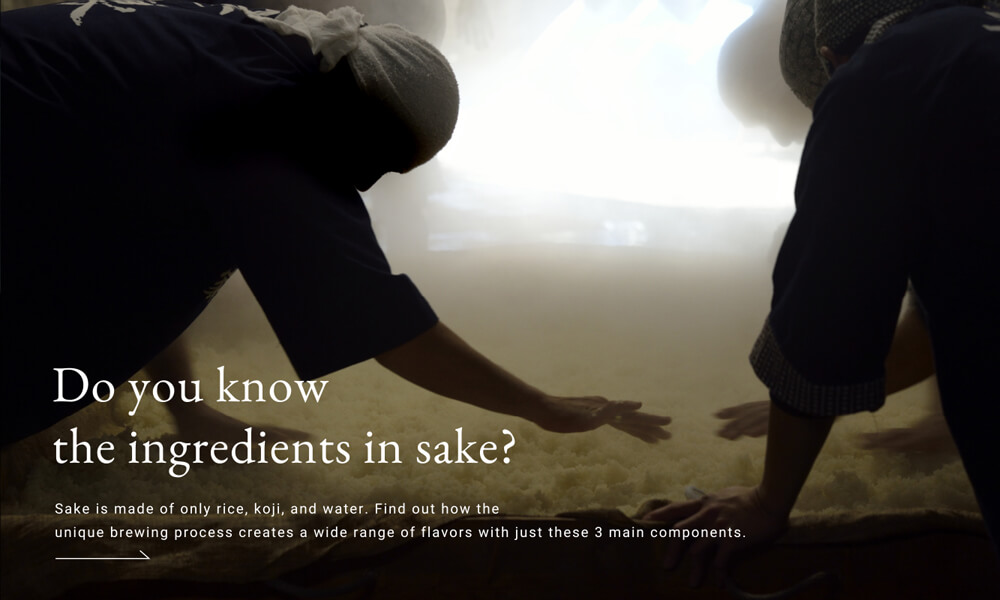
Wine is naturally fermented by pressing grapes and adding yeast. Sake, however, is not fermented by adding yeast to rice, but through the use of koji, which converts the starch in the rice into sugar. The rice begins fermenting once the yeast is added to this sugar. Because the saccharification and fermentation processes occur in parallel in the same container, the process is called “multiple parallel fermentation.” |
 |
| |
View the Process Chart |
|